›
Te Awa Tupua
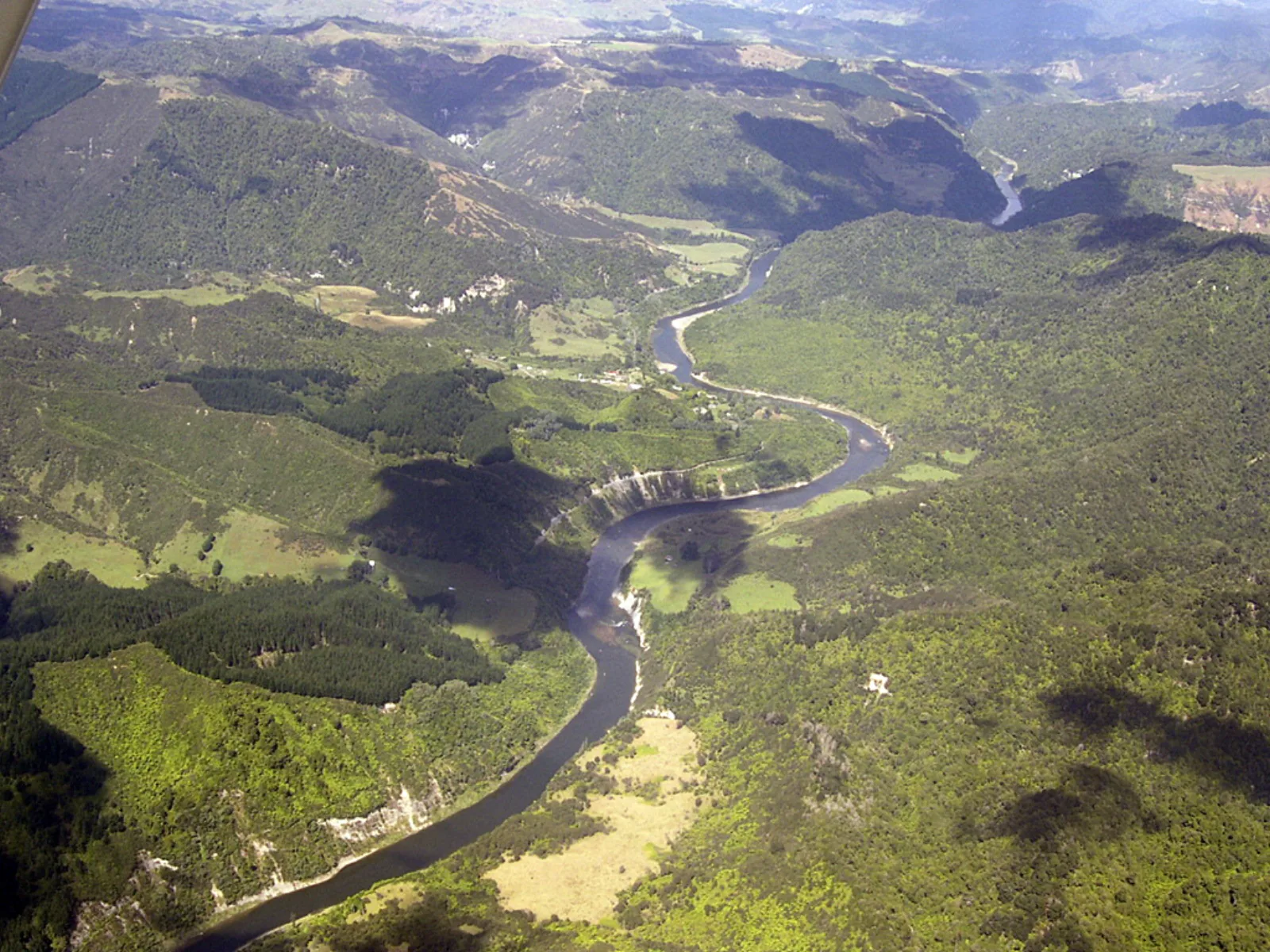
Then you've already started. The walk is on the more-than-human — what stops being a metaphor when we look closely. We can begin in 2017, on a river in New Zealand that became a person.
On the fourteenth of March, 2017, the Te Awa Tupua (Whanganui River Claims Settlement) Act passed in the New Zealand Parliament. The act runs to one hundred and sixteen pages. It was the result of a one-hundred-and-forty-year negotiation between the Crown and the Whanganui Iwi, the Māori people whose rohe — territory — the river runs through.
The act says the river is "an indivisible and living whole" with "all the rights, powers, duties, and liabilities of a legal person." Two guardians, called Te Pou Tupua, represent the river — one nominated by the Crown, one by the iwi. They speak for the river in court. The river holds property. The river can sue. The river can be sued.
This is not a thought experiment. It is a working legal status. When a contractor pollutes the river, the suit is brought by the river, against the contractor.
The Whanganui Iwi were not surprised that the river was a person. They had been saying so for centuries. The pepeha, the formal Māori introduction, names a person's mountain and river before it names their family. The act is the Crown catching up to what the iwi already knew.
We can stay with the legal precedent — the Cuyahoga, the Yamuna, the Ganges, all rivers that have been granted some form of personhood since Te Awa Tupua — or we can move forward to Bruno Latour, who built the philosophical infrastructure for a world in which a river can be a person.
Latour
Bruno Latour spent fifty years arguing that the line between human and nonhuman, society and nature, was a modern invention.
In We Have Never Been Modern (1991) he proposed that the modern constitution — the agreement that puts humans and nature in separate boxes, science on one side and politics on the other — has never actually held. Things have always crossed back and forth. Viruses are political. Atmospheres are political. The hole in the ozone layer is political. None of these stay where the modern constitution says they should.
In Politics of Nature (1999) he made a sharper move. He proposed a parliament of things. A political body that included nonhuman entities — viruses, atmospheres, rivers, microbes, forests — as actors. Not as objects to be managed by human institutions but as agents with positions of their own.
The Whanganui Act is the Latourian thought experiment turned into legislation. The river has a seat at the table. The river votes through its guardians.
Latour's last major book, Facing Gaia (2017), extended the argument to the planet. Gaia, he wrote, is not a goddess and not a metaphor. It is a name for "the metabolic interactions and reactions" that link the species and surfaces of Earth into one body. We are inside Gaia. We do not stand outside her, looking at her, deciding what to do with her. We are part of what she is doing.
From here we can stay with Latour for one more move — actor-network theory, his earlier work on how scientific facts are made — or we can move forward to Anna Tsing, who walks the Latourian world on foot in a forest in Oregon, looking for a mushroom.
Tsing
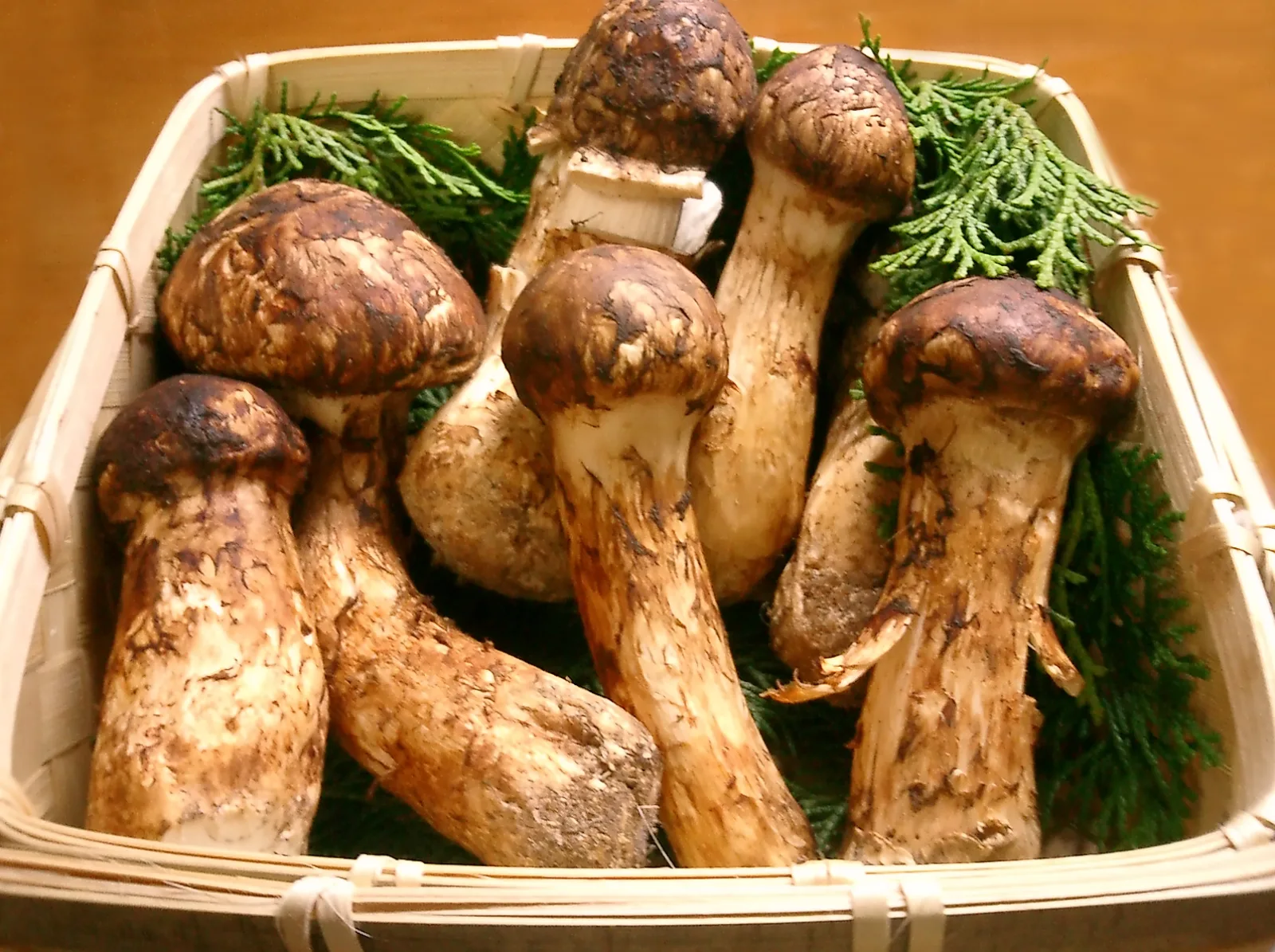
Anna Tsing's The Mushroom at the End of the World (2015) is a book about a mushroom. The matsutake. It grows only in disturbed forests. Places where the original ecology has been broken — clearcut, replanted, abandoned. The mushroom appears in the ruin.
Tsing followed matsutake hunters in Oregon, Japan, Yunnan, and Lapland. The hunters in Oregon are mostly migrants — Mien refugees from the Laotian highlands, Hmong, Lao, Cambodian, displaced Japanese-Americans. They walk through ruined Cascade forests where the old-growth was logged a century ago and the second growth has been cut twice since. They find the mushrooms among the rotting fir stumps. They sell them to buyers who ship them to Japanese markets where they sell for hundreds of dollars per pound.
The matsutake is one of the most expensive foods in the world. It cannot be cultivated. It only grows where humans have already broken the ecology. The economy that surrounds it is held together not by the logic of plantation agriculture or the logic of capitalist supply chains but by what Tsing calls latent commons. Unplanned cooperation among hunters, buyers, mushrooms, fungi, and trees.
The argument is harder than it looks. Tsing does not say that the matsutake economy is good. She says it is real. It is what life looks like in the ruin. It is what cooperation looks like when the system has already failed.
The mushroom is a teacher. It says: the planet you are trying to save is already gone. Here is the planet that came after. Here is what a polyphonic, multispecies, post-collapse economy already looks like, growing under your feet.
We can stay with Tsing — her chapters on Yunnan, on Japanese matsutake culture, on the friction of the supply chain — or we can move forward to Suzanne Simard, who has been working underground on the network the matsutake is part of.
Simard
Suzanne Simard spent thirty years in the forests of British Columbia, mostly alone, mapping how trees talk.
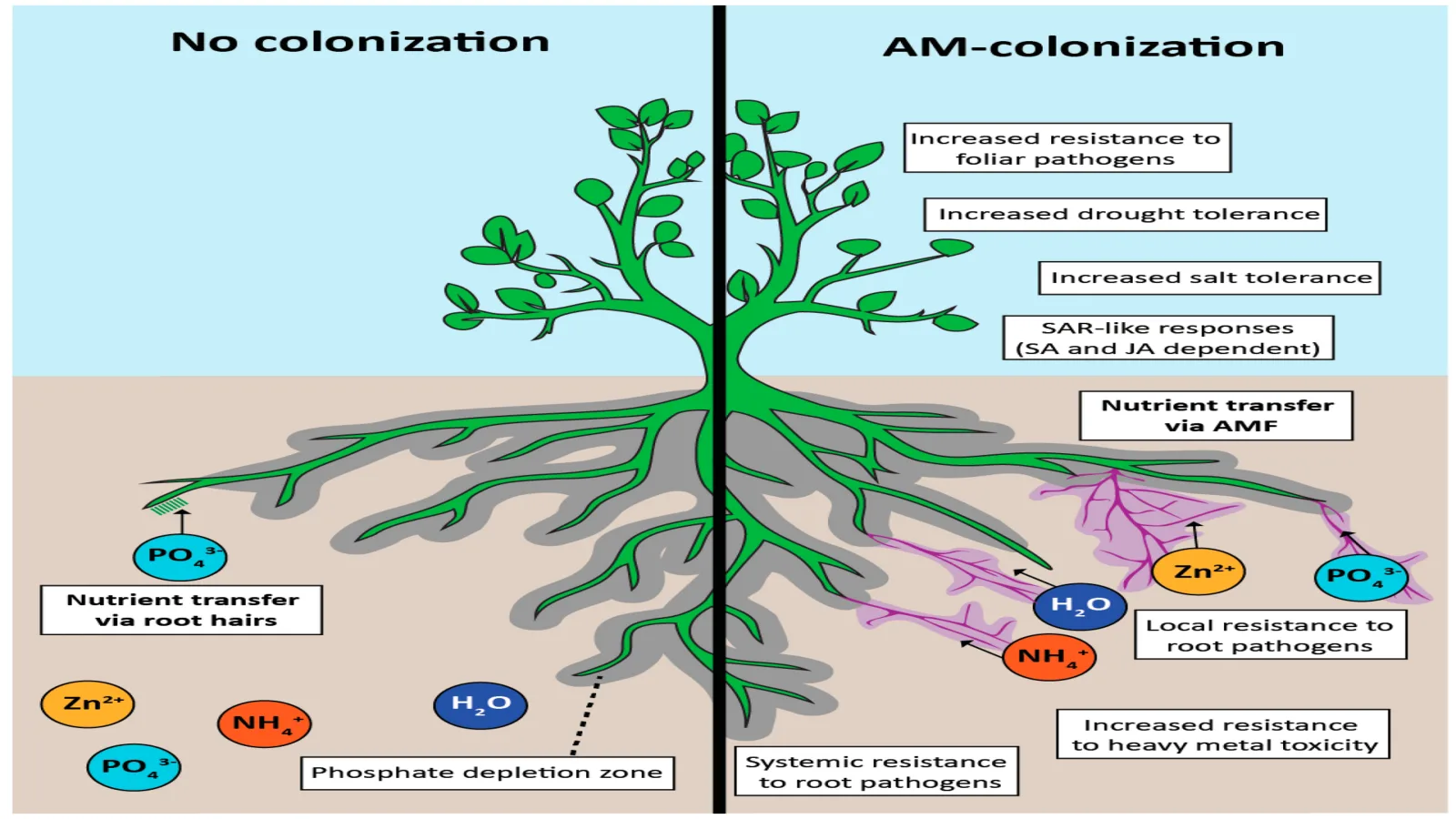
Her early experiments, in the late 1990s, used radioactively tagged carbon. She injected a Douglas fir with carbon-14 and tracked where it went. The carbon moved underground, through fungal threads called mycorrhizae. It came up in the roots of a paper birch fifteen feet away. A different species. The fir was feeding the birch.
She kept tracking. She found that the network was not random. The largest trees — what she called "mother trees" — were the network's hubs. They sent more carbon, and more often, to younger trees, including trees of other species. They sent more to trees that were stressed, sick, or shaded out. They recognized their own offspring and favored them. They recognized themselves dying and dumped their carbon into the network in their final season.
The popular name for the network is the wood-wide web. Simard didn't coin the phrase but she gave it the science. She showed that the mycorrhizae carry water, nutrients, hormones, alarm signals, and chemical instructions between trees of different species. The forest is not a collection of competing individuals. The forest is a network of cooperation, with the fungi as the medium.
Read this against Tsing. The matsutake is one of the fungi in the network. The matsutake hunters, walking above ground through ruined forests, are part of an economy that has been running underground, between trees, for tens of thousands of years.
Read it against Latour. The forest does not speak. The forest is, however, doing what a parliament does. It is signaling. It is voting on resource allocation. It is responding to disturbance. The seat at the table is already occupied.
From here we can move forward to Stefano Mancuso, who has spent the past two decades arguing that plants themselves — not just the network they are part of, but the individual plant — are intelligent. Or we can sideways to Robin Wall Kimmerer, who reads Simard's findings against the Indigenous knowledge that anticipated them.
Mancuso
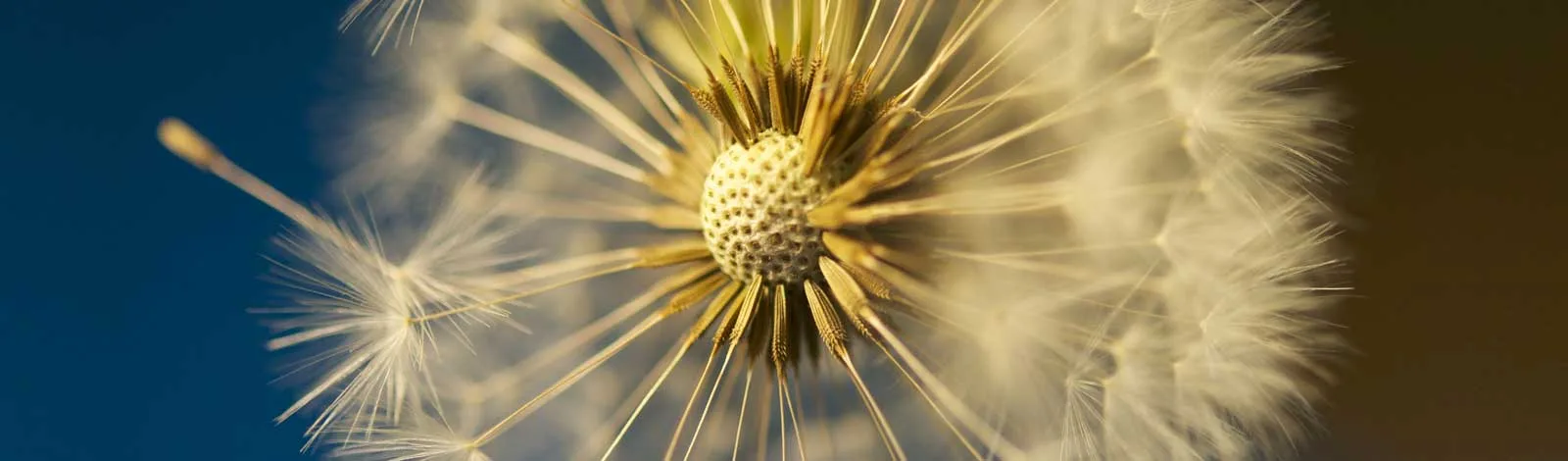
Stefano Mancuso runs the International Laboratory of Plant Neurobiology in Florence, in a small university outbuilding next to the Renaissance city. The name of the lab is a deliberate provocation. The standard biology of his field says plants do not have neurobiology. Mancuso has spent twenty years showing they do.
In Brilliant Green (2015) and The Revolutionary Genius of Plants (2017) he documented experiments showing that plants recognize their kin and favor them in resource allocation, communicate with chemical signals, solve problems (a pea plant in a maze finds the most efficient path to light), make decisions about where to grow, and remember (a Mimosa plant trained to ignore a benign disturbance retains the lesson for weeks).
His position, which a younger generation of botanists now broadly accepts: a plant is an organism distributed across roots and leaves. Its "brain" is not an organ. It is a network of root tips, each one sensing, computing, and signalling. The plant's intelligence is a distributed system, the way an octopus's intelligence is a distributed system, the way a swarm's intelligence is a distributed system.
Read this against Simard's wood-wide web and Mancuso's claim becomes structural rather than provocative. Plants are not isolated cognitive agents. They are nodes in a multispecies network that thinks together. The forest thinks. The garden thinks. The grass on a Brooklyn street thinks.
This is not a metaphor. It is a measurement. Mancuso's lab has been measuring it since 2003.
One more node before we close the walk. Donna Haraway has been the bridge between this walk and the Democracy walk. In Democracy we visited her on companion species. Here she returns to do the political close — the move from biology to kinship.
Haraway
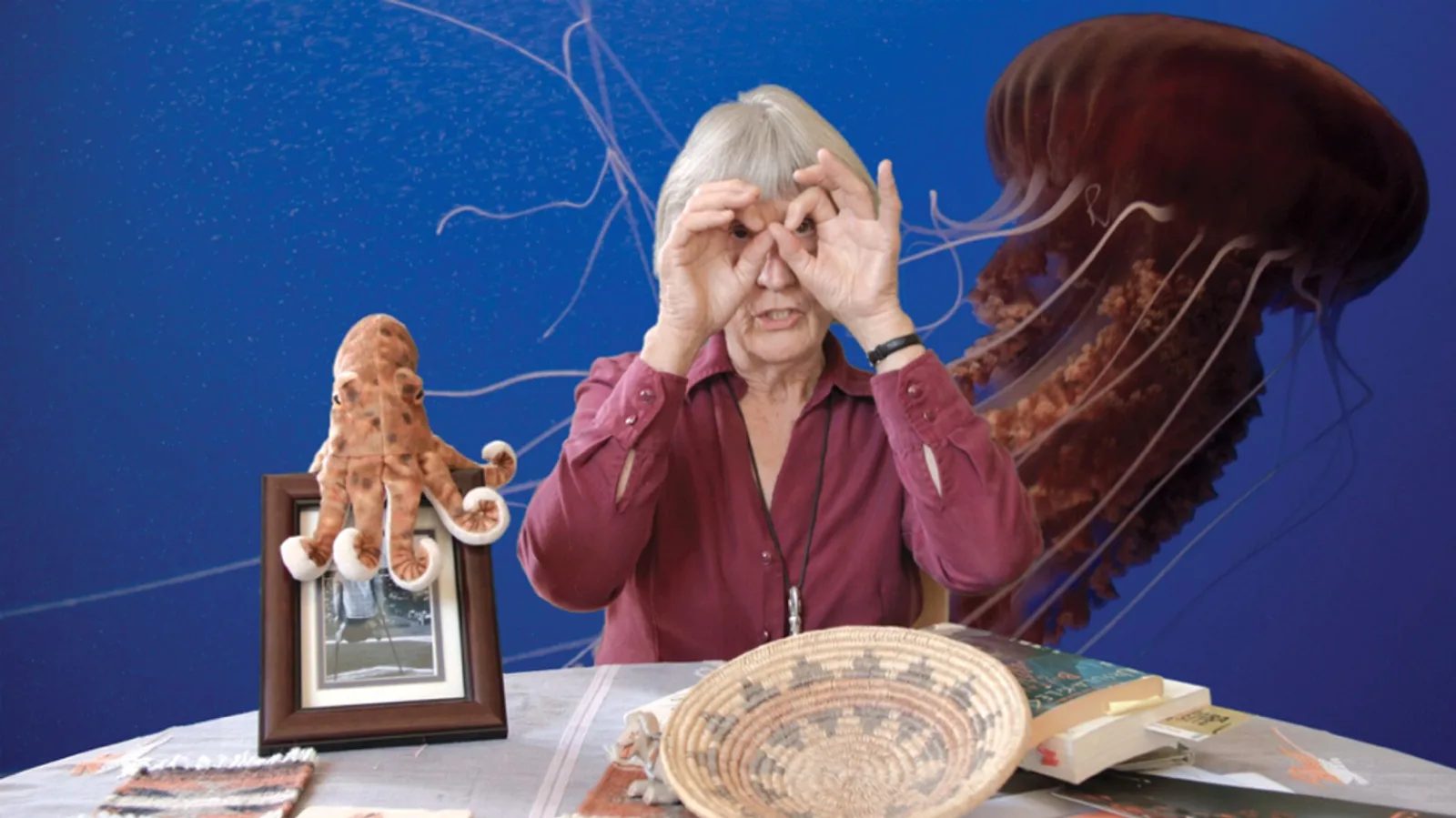
Donna Haraway has been the bridge across this walk and the Democracy walk. In Democracy she taught us to read the bees as kin, not as a model. Here she does the political close.
Her later book, Staying with the Trouble (2016), introduces a phrase that has taken on a life of its own: "Make kin, not babies."
The phrase is not a slogan against reproduction. It is a reorientation of what counts as relation. Kinship, Haraway argues, has always been multispecies. The household is not just human members — it includes the dog, the bacteria in the gut, the sourdough starter on the counter, the ant colony in the wall. The neighborhood is not just neighbors — it is the trees, the urban birds, the mushrooms on the dead branch in the empty lot. The body is not just self — every human body is a multi-species ecosystem with more bacterial cells than human cells. You are about one percent human by cell count.
Making kin is the political move that follows from everything the walk has shown. The river is kin. The mushroom is kin. The forest is kin. The plants in your apartment are kin. The bees are kin. The microbes in your gut are kin.
If kinship is the unit of political recognition, the parliament of things is no longer a thought experiment. It is a description of what already exists. The Whanganui Act is the working version. The matsutake economy is a working version. The wood-wide web is a working version. The political question that remains is whether human institutions catch up to the multispecies parliaments they already sit inside.
The walk has been an argument that catching up is the work.
Leave a mark
That was the Sustainability walk. Or one version of it. Other walkers have taken it through the Cuyahoga and the Ganges, through Robin Wall Kimmerer, through Eduardo Kohn's forests, through Lynn Margulis on symbiosis. The path forks at every node.
Right now, four other people are still walking. One is at Tsing in the matsutake forest. One is in Simard's network. One has just left a mark at Te Awa Tupua.
Before you go, you can leave a mark on this walk. A sentence. A link. A photograph of something growing near you.