›
Julian of Norwich
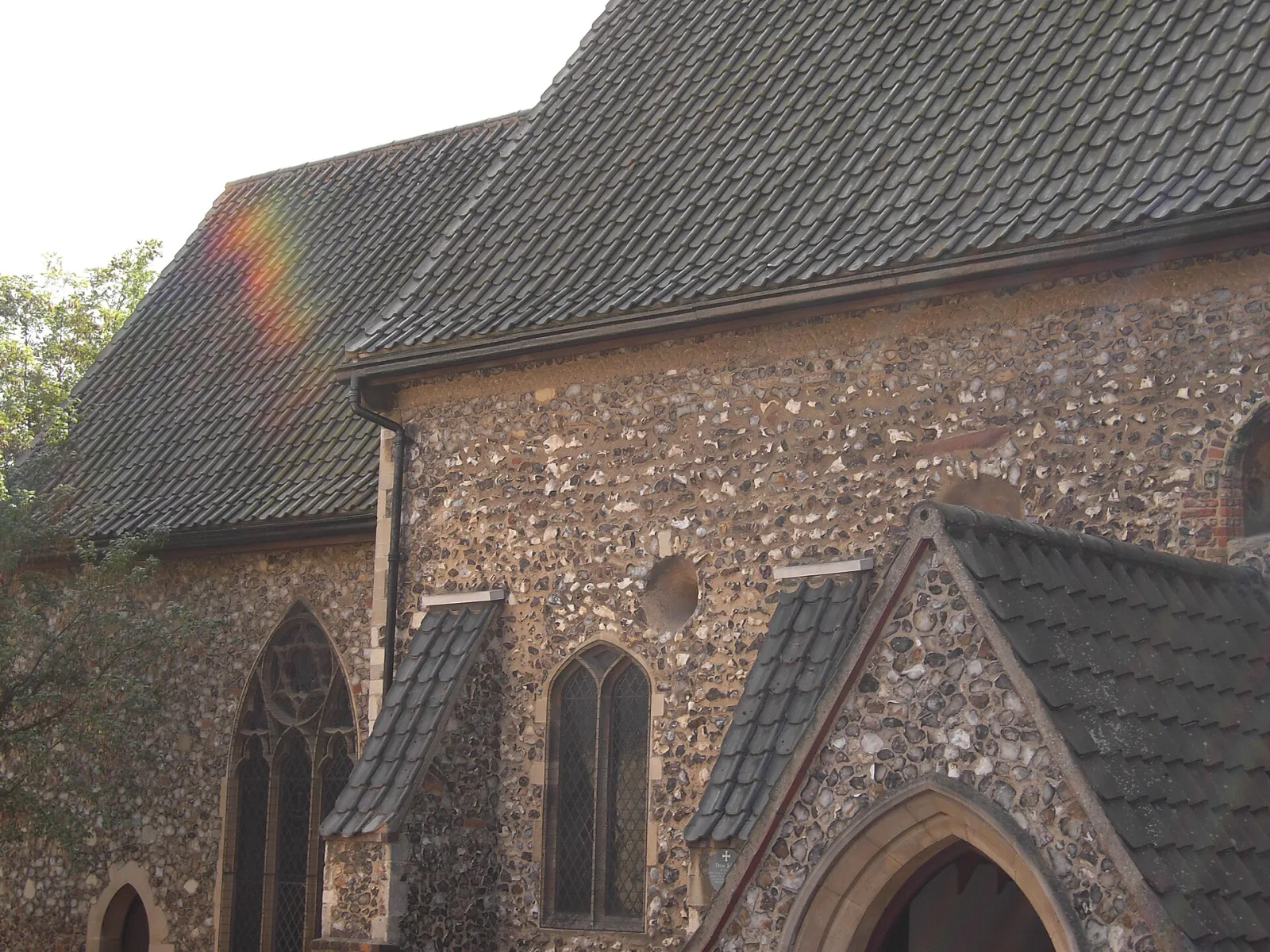
Then you've already started. The walk is on attention itself — what it means to stay here, with this thing, without grasping. We can begin in the fourteenth century.
In 1373, in a small stone cell attached to St. Julian's Church in Norwich, a woman fell ill. She was thirty years old. The illness was severe enough that she received last rites. While she was dying, she had a series of sixteen visions.
She did not die. She lived another forty years, alone in the cell, writing. The text she produced is called Revelations of Divine Love. It is the first book in English written by a woman whose name we know.
The visions are about pain and joy and the body of Christ. The line that comes back, the one that holds the whole thing together, is six words: "All shall be well, and all shall be well, and all manner of thing shall be well."
It is not optimism. It is not denial. It is what attention sounds like, in the fourteenth century, when held against catastrophe.
We can stay with Julian for one more moment, or we can move sideways to Hildegard of Bingen, who came two centuries earlier and wrote in a similar register, or we can move forward to a different tradition — the Blue Cliff Record, six hundred years before Julian, in Song-dynasty China.
The Blue Cliff Record
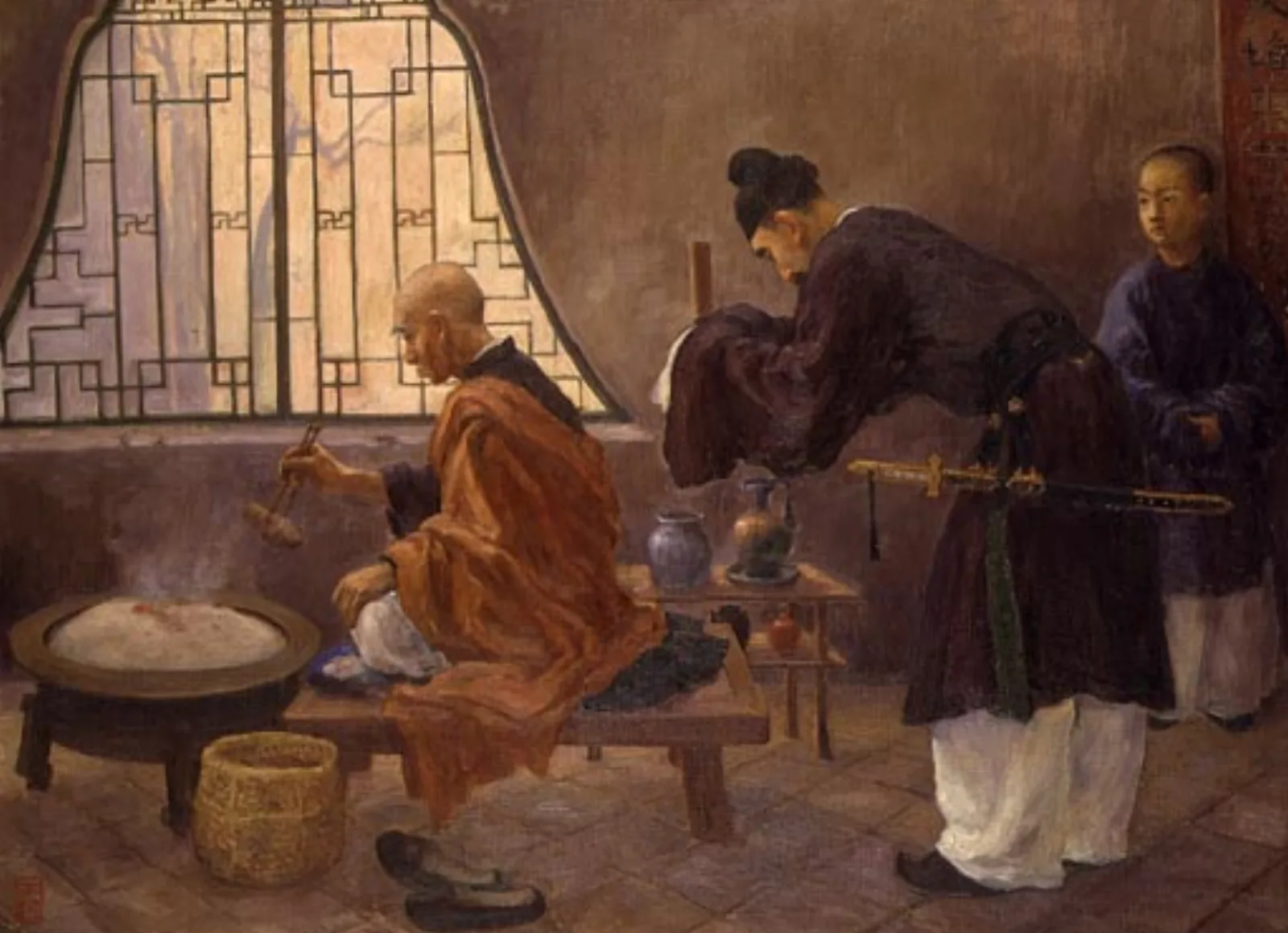
Six hundred years before Julian, in Song-dynasty China, a Chan master named Yuanwu Keqin compiled a collection of one hundred koans. The text is called the Blue Cliff Record. It has been studied by Zen students, Chan monks, and translators for nine hundred years.
A koan is not a riddle. It is a kind of question that breaks the asking.
Case 37 in the Blue Cliff Record goes like this. A monk asked Chao-chou: "What is the meaning of Bodhidharma's coming from the West?" Chao-chou said: "The cypress tree in the garden."
Centuries of commentary on this case all say roughly the same thing. The tree is not a metaphor. The tree is the answer. Attention to the tree is what Bodhidharma came for. Anything else you say, you have already left.
Julian and Chao-chou, six centuries apart, do the same move. Stay with what is in front of you. Don't grasp it. Don't explain it. Notice that it is here.
From here we can move forward to a single haiku — Basho's pond and frog, the seventeen syllables that have absorbed more attention than any other in Japanese — or sideways to Dōgen, the thirteenth-century Zen master who wrote about time itself as a practice of attention.
Basho
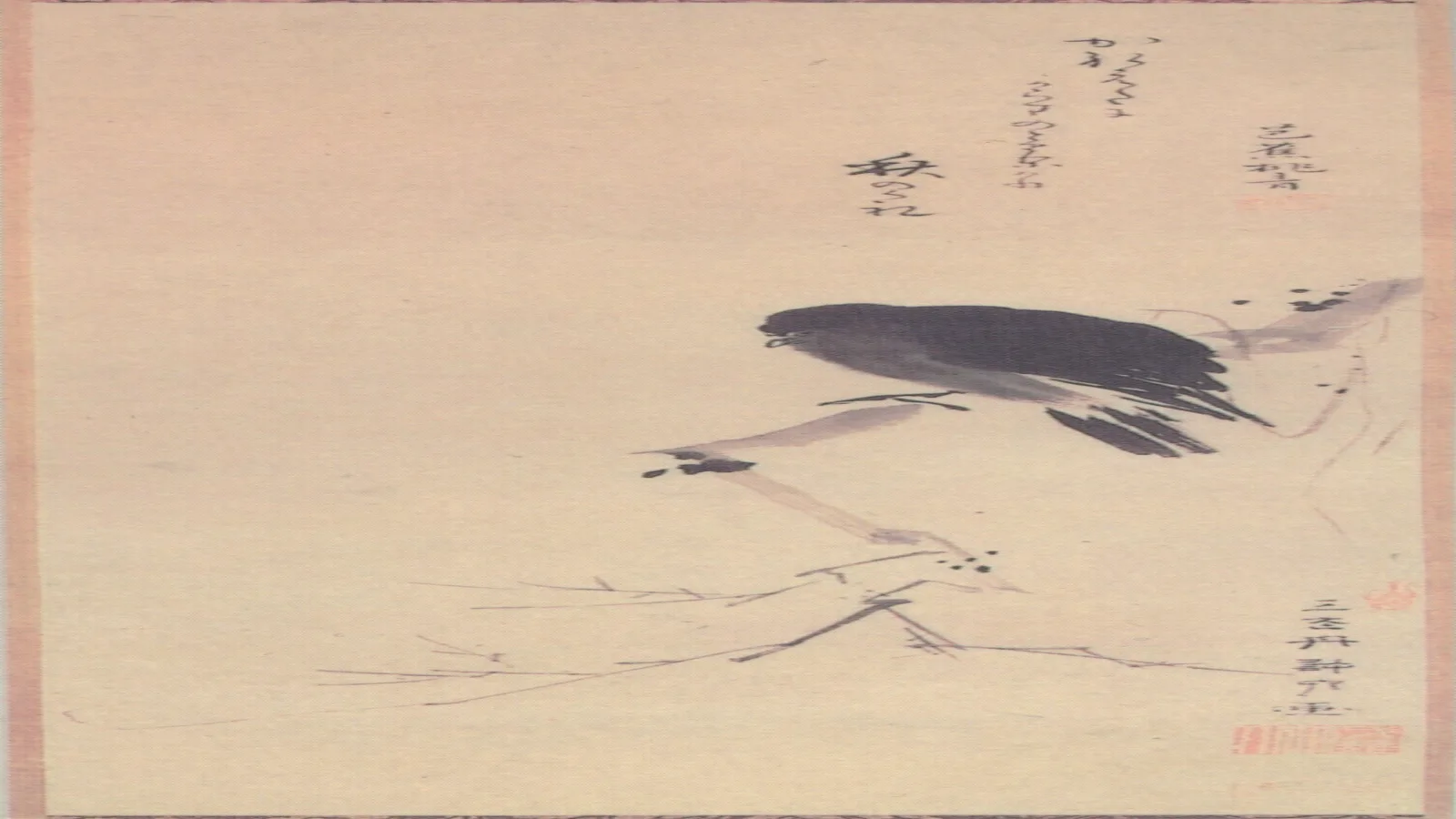
In 1686, Matsuo Basho wrote what is now the most famous haiku in Japanese literature. It is seventeen syllables. In English it usually runs:
Old pond —
a frog jumps in —
the sound of water.
Basho was a wandering teacher. He walked from town to town, sometimes alone, sometimes with a student, writing what he saw. He was not interested in describing the pond. He was interested in being there when the frog jumped.
Three lines. A few words each. One held instant.
The whole apparatus of haiku — the form, the season-word, the cut — exists to direct attention to one moment that the world has already been performing without an audience. The poet's job is to be the audience.
Read Basho alongside Julian and Chao-chou and it stops being a coincidence. The contemplative traditions are saying the same thing in three languages: stay here. Stay with this thing. Do not look past it for the meaning.
John Cage

In 1952, John Cage premiered a piece for piano in three movements. The pianist, David Tudor, walked onto the stage at the Maverick Concert Hall in Woodstock, New York. He sat at the piano. He opened the lid. He started a stopwatch. For the first movement, thirty seconds, he did nothing. For the second movement, two minutes and twenty-three seconds, he did nothing. For the third movement, one minute and forty seconds, he did nothing. Then he closed the lid and stood.
The audience heard the wind in the trees outside. They heard rain on the metal roof. They heard each other breathing. They heard themselves grow uncomfortable. Some of them walked out.
Cage said later that there is no such thing as silence. He had visited an anechoic chamber at Harvard, a room engineered to absorb all sound, and inside it he heard two sounds — one high, one low. The engineer told him they were his nervous system and his blood circulating. There is no silence. There is only what you are listening to.
4'33" is a Zen koan in the form of a concert. It does not contain music. It contains the audience's attention to the room they are in. The composition is the listening.
Chao-chou would have said: the cypress tree in the garden.
From here we can move forward to Pauline Oliveros, who took Cage's question and made it a discipline she called Deep Listening. Or sideways to Morton Feldman, whose pieces lasted six hours and changed what duration could carry.
Pauline Oliveros
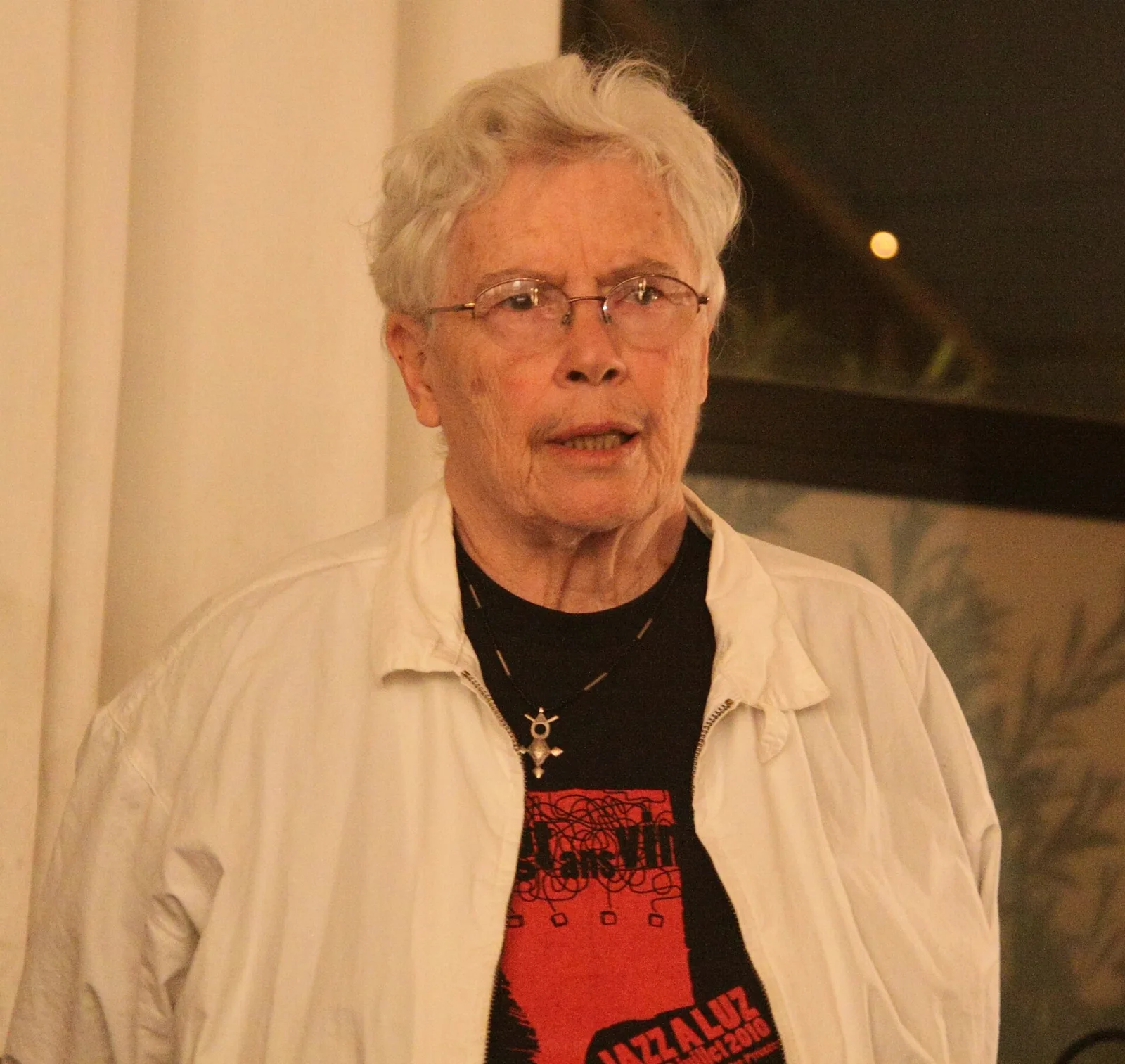
Pauline Oliveros took Cage's question and made it a practice. She called it Deep Listening.
In 1988 she descended into a cistern at the decommissioned Fort Worden in Washington State. The cistern is fourteen feet underground. The reverb is forty-five seconds. She brought an accordion and a microphone. She listened to the space, then she played to the space, then she listened again.
The recording is called Deep Listening. It became the foundation of a discipline she taught for the next thirty years. The discipline is simple: listen to everything you can hear, including what you don't usually notice. Listen to what you are listening with — your nervous system, your bones, the room. Listen to silence. Listen to the listening.
Oliveros called the body an antenna. The composer's job is to tune it.
Read this back through the walk. Julian's body in a cell, listening to her visions. Chao-chou's body in a garden, listening to a tree. Basho's body by a pond, listening for a frog. Cage's audience, listening to themselves grow uncomfortable. Oliveros, listening to a cistern from inside it.
The shape of the practice is the same. The body is the instrument. Attention is the music.
From Oliveros we can move forward to Marina Abramović, who in 2010 sat in a wooden chair at MoMA for seven hundred and twenty hours and the sitting was the art. Or sideways to Björk, who has been working on the body-as-antenna her whole career.
Marina Abramović
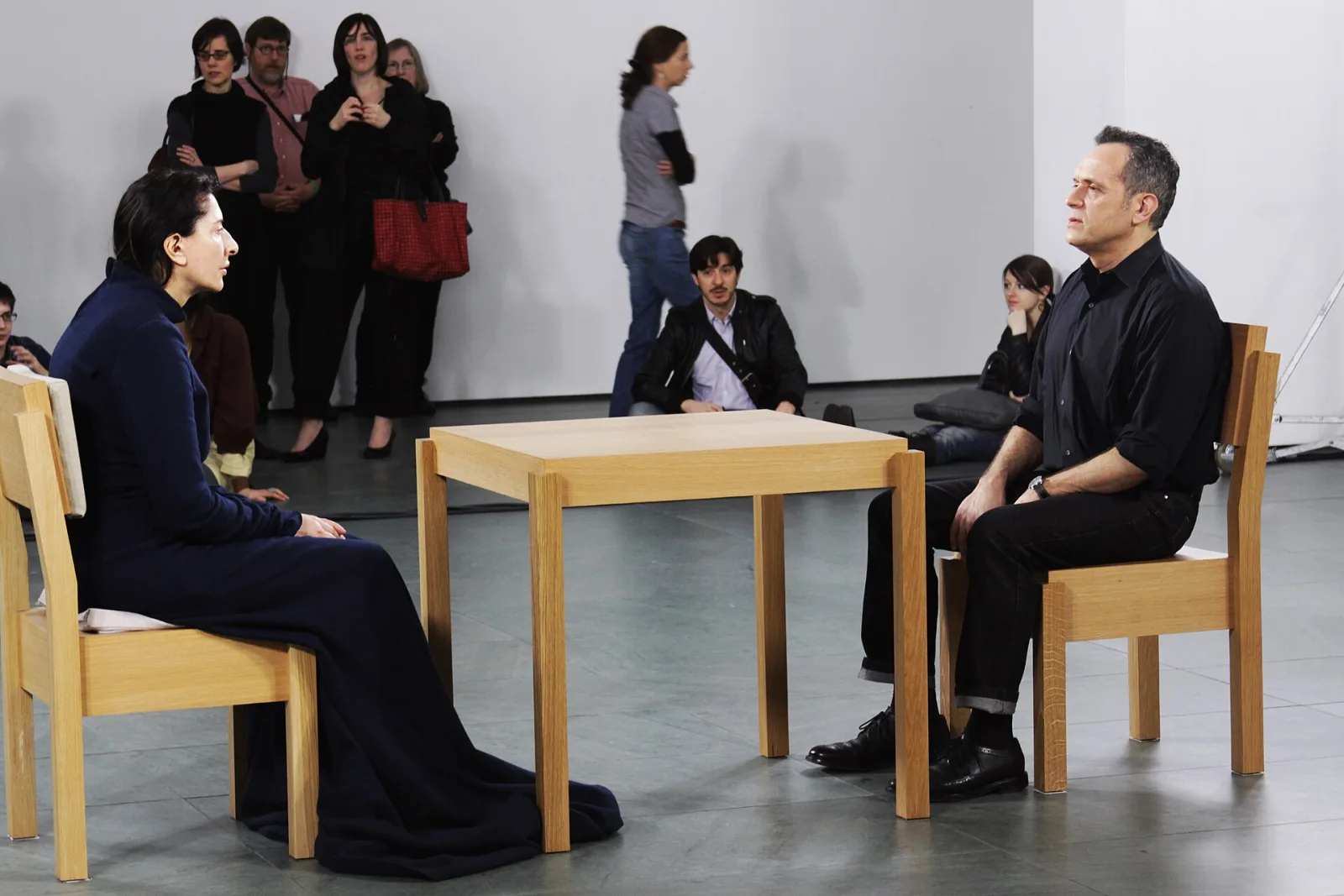
In the spring of 2010, at MoMA in New York, Marina Abramović sat in a wooden chair on the second floor for seven hundred and twenty hours. She did not move. She did not eat in the gallery. She did not speak.
Visitors who wanted to could sit in a chair across from her. She would look at them. They would look at her. Then they would leave or stay as long as they liked.
Eight hundred and fifty thousand people came through MoMA during the run. Fifteen hundred people sat across from her. Some of them sat for four minutes. Some of them sat for four hours. Some of them cried. One of them was Ulay, her former partner, whom she had not seen in twenty-three years. They both cried.
The piece is called The Artist Is Present. The art is the sitting. There is no object. There is no music. There is no text on the wall.
Read this against Cage's silence and Oliveros's listening and the line is straight. The composition is the attention. The artist's job is to hold the room. The visitor's job is to show up.
The walk you are now near the end of has been an argument that this is not a metaphor. It is what art has been doing in every tradition the walk has touched. Julian's cell, Chao-chou's garden, Basho's pond, Cage's silence, Oliveros's cistern, Abramović's chair. Different rooms. Same instruction. Stay here. Stay with this. Do not look past it.
Leave a mark
That was the Lyric Attention walk. Or one version of it. Other walkers have taken it through Hildegard of Bingen, Simone Weil, Dōgen, Anne Carson, Morton Feldman, Björk. The path forks at every node. Yours has been one of many possible walks.
Right now, seven other people are still walking. One is sitting at Cage. One is at Julian. One has just left a mark at Oliveros.
Before you go, you can leave a mark on this walk. A sentence. A link. A piece of room tone. The next walker who comes through will see it.